








Erin O’Driscoll
With 536 active members in the latest report, Greek life has a large presence at the University of Maine. I should be upfront and say that I am in Greek life, and while writing this article, I am actively participating in formal recruitment as a member of Delta Zeta. As the Panhellenic Delegate for my chapter, I can give insight into the hard work that the Panhellenic Council puts into the well-being of the chapters on campus.
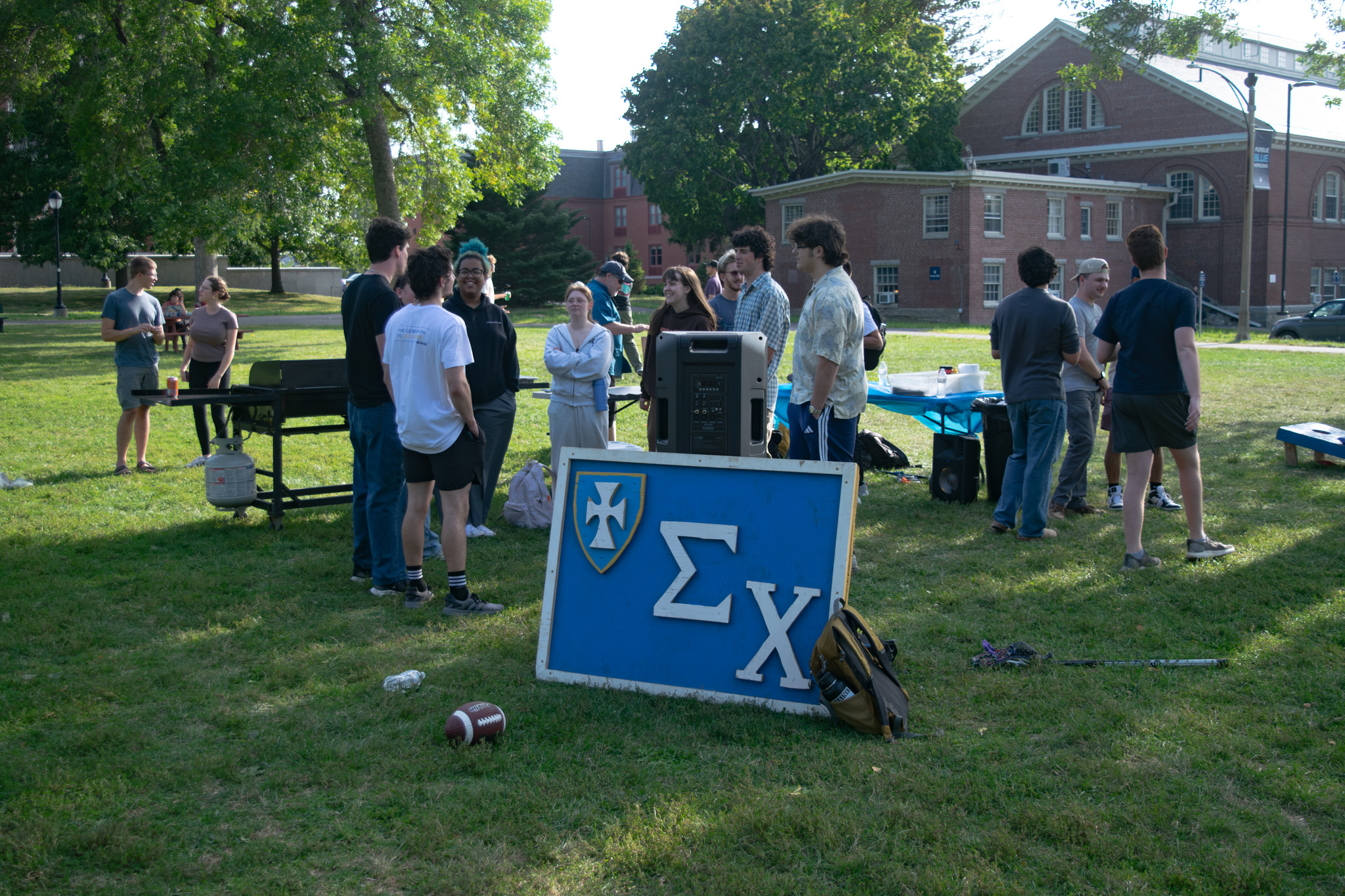
On to the question that has probably been swirling in your brain: “What about the fraternities?” Truthfully, I am not an expert on fraternity life. To start, there are 13 fraternities here on campus: 12 national fraternities and one local (Phi Eta Kappa). All of these chapters are overseen by the Interfraternity Council (IFC), but that is just logistics—who are these people?
If you asked YikYak users, the picture painted for you may resemble a stereotypical image of a guy you plucked straight from Nantucket. Moreover, you may hear a lot about what the process to join a fraternity is, and this is where the line between fact and fiction starts to get blurry. I am not here to definitively tell you that certain things are or are not happening; after all, I am not at these events. What I do know is that the IFC has put a lot of effort into making a positive impact on their member chapters and campus as a whole by supporting philanthropic efforts of their chapters and making space for their members to voice concerns.
While there are things you may have heard of before, like the all-Greek new-member education, Title IX and safety presentations, I understand the concern that if the same systems have been in place for years and it feels like there is no progress, what is this all for?
As I alluded to earlier, Greek life is constantly aiming to improve and measures are going into place at fraternity events this year that I believe are for the better. The IFC Vice President of Risk and Judicial Affairs, Avery Olsen, with generous support from the Alton 38 and Adelaide Hamm Campus Activity Fund, received $1,500 which he will use to get 1,200 drink testers for our campus.
The testers indicate if a drink has been tampered with and a concrete plan has been developed for distribution. Each sorority will receive 50 testers to distribute to their members as they see fit, whether it is to members individually or to implement in their risk prevention program.
Moreover, each fraternity, including dry fraternities, will also receive 50 testers for their members. For the non-Greek student body, IFC is working with the Fraternity and Sorority Life (FSL) office to ensure that all approved events where alcohol can be present will have these drink testers upon request of their guests. For the remaining testers, they will be available for any student in the FSL office, which is located in room 120 in the Memorial Union.
I am not going to sit here and tell you that this solves all the problems you may have with fraternities, but I say this to show that there are people out there who are making efforts toward improvement. While there will always be bumps in the road, there is a drive on campus to be better from fraternities and sororities alike through continued partnerships, service projects and continuous education. All organizational conduct findings as well as sanctions are accessible through the FSL website. On that website, you can also find out how much each chapter has raised for their philanthropy. Greek life as a whole has completed more than 14,000 hours of community service combined.
So maybe I did not change your mind about Greek life in this one article, but I hope that you gained a new perspective about these organizations, the strides they are making and the contribution that they make to campus life.