












Wade Rouse
Forty years ago, The Golden Girls first premiered on TV.
At that time in the fall of 1985, I was—on the surface—your stereotypical fraternity boy, just like the shirtless guys you see screaming every Saturday in the stands of college football games: I could chug a keg beer (often upside down), I was addicted to sports and MTV, I feathered my hair, I pulled all-nighters, I ate Domino’s Pizza at midnight.
The Golden Girls was not meant for a 19-year-old guy like me. I mean, four old women living together in a pink house in Florida versus 40 guys packed into a fraternity house?
C’mon.
But it turns out Dorothy, Blanche, Rose and Sophia had a lot to say to a kid who was not only struggling to find his place in the world but also hiding a big secret: I was gay.
And despite the fact that I was the life of the party, I wanted to end my life.
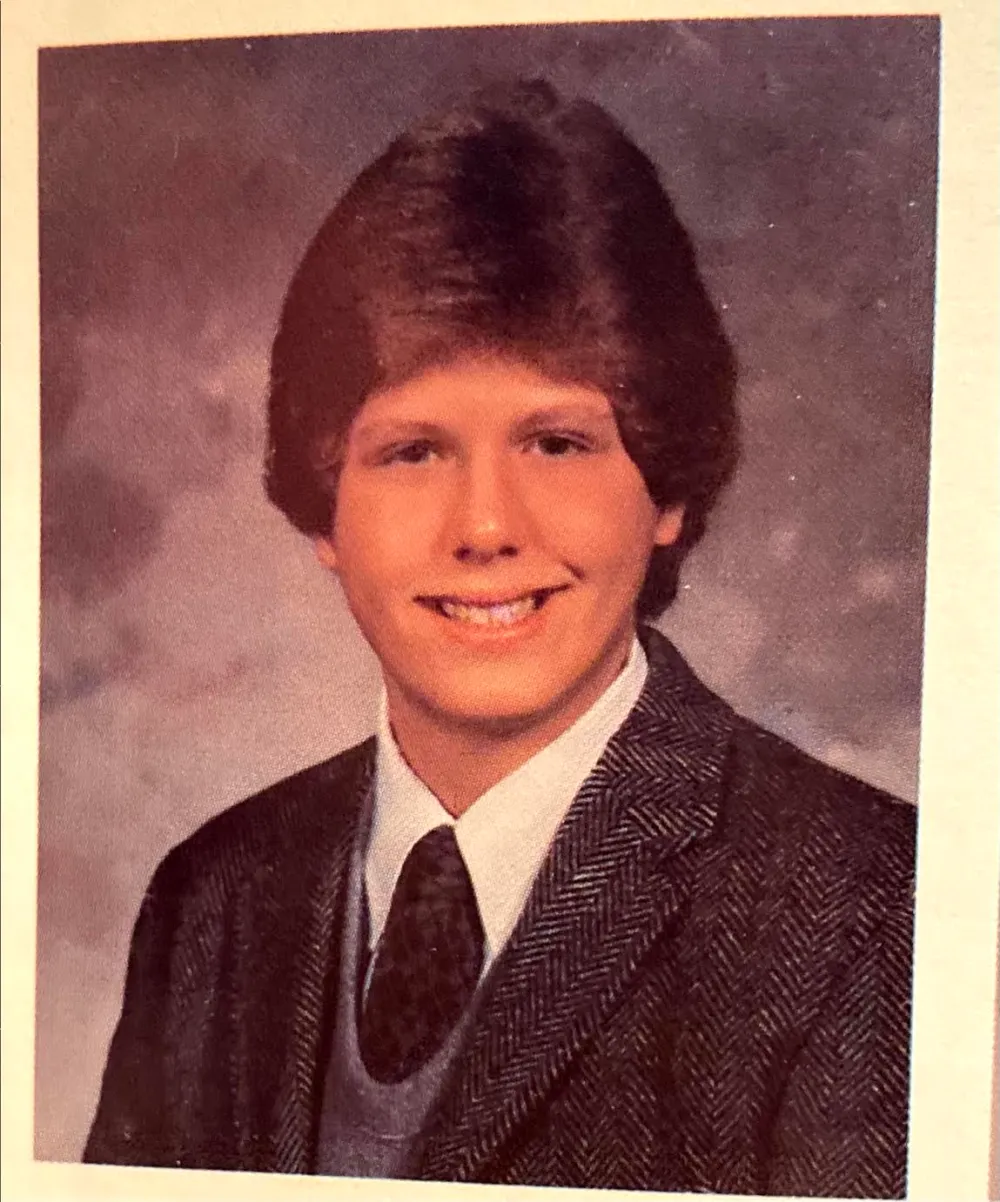
Wade Rouse’s high school senior portrait from 1983. | Courtesy Wade Rouse
Just a few years earlier, I decided to bury my secret just as I had buried by my older brother, Todd, who had died in a tragic accident. My brother was a true country boy who I believed would have given my parents everything they wanted: a daughter-in-law, grandchildren, a normal existence.
So I put on a mask and played pretend.
I had not wanted to go to college and leave my mother and grandmother alone. I was their best friend, and they were mine, but they both pushed me out of the nest and our small town, telling me a bigger world was waiting for me and my gifts.
Every two weeks, my working, poor grandmother would write me a letter (remember those?) with $20 inside. Every Sunday, my mother would call me on the pay phone (remember those?) at the end of the dormitory hall.